
Introduction: Address the high-achieving professional who has tried everything—meditation, productivity hacks, therapy—but still feels a chronic, underlying stress. Validate the feeling that 'something upstream is running' and pose the question: What if you've been targeting the symptoms, not the source?
You’ve done everything right. You’ve downloaded the meditation apps, implemented the productivity systems, and maybe even spent hours in therapy. Externally, you’re a picture of success—a high-achieving professional navigating a demanding world. But internally, a different story is playing out. There’s a persistent, low-grade hum of activation, a mental fog that won’t lift, and a feeling of being perpetually braced for the next demand. If you've ever felt that despite your best efforts, 'something upstream is running' that you just can't seem to access or control, you’re not just imagining it. What if the tools you've been using are designed to manage the smoke, while the fire rages on, untouched?

The Real Problem – Signal vs. Narrative
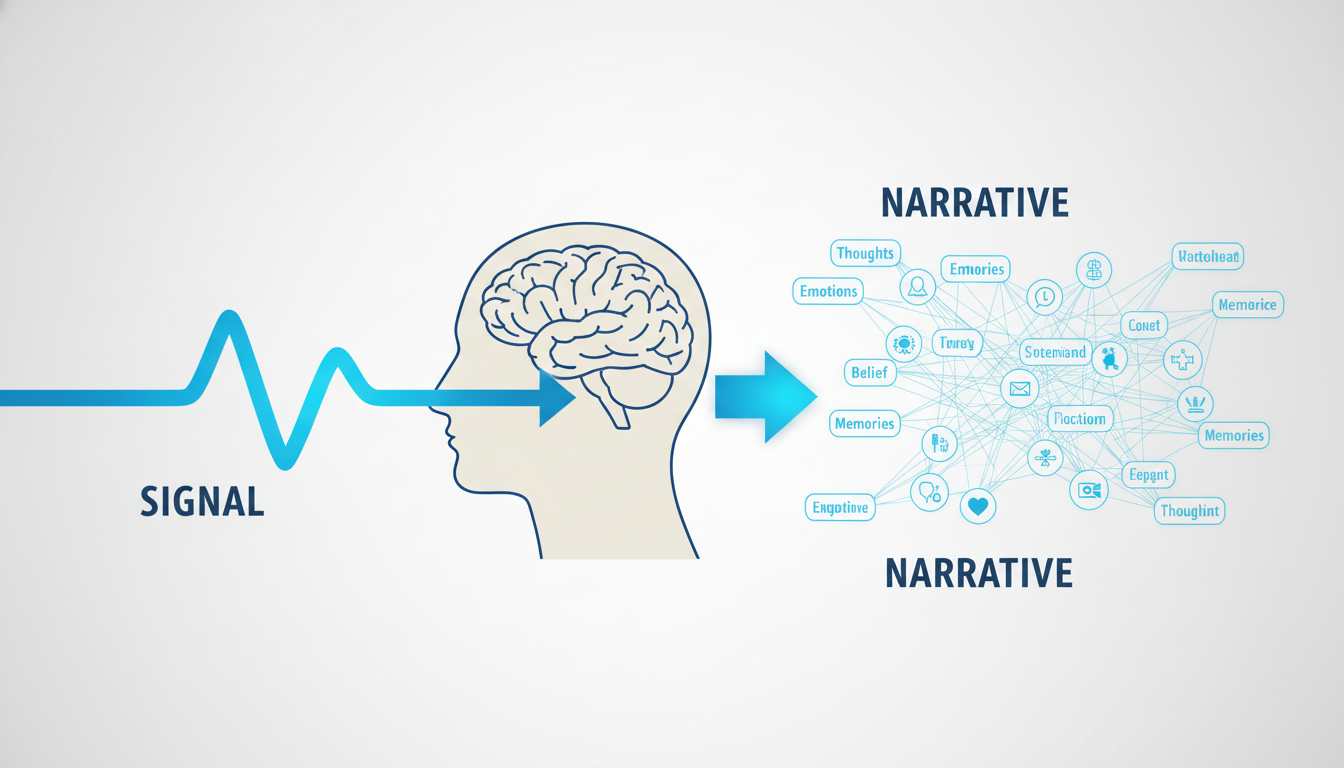
The fundamental reason traditional stress management techniques often fall short is that they operate at the wrong level. Most methods—from cognitive behavioral therapy to positive affirmations—focus on changing your narrative. The narrative is the collection of stories, thoughts, and interpretations you have about your experience. While important, the narrative is a downstream effect. It's a response to a much deeper, more primal process: the signal.
The signal is the raw, biological data your nervous system processes every millisecond. It’s the pre-cognitive, pre-emotional information that tells you whether you are safe or in danger. When you live in a state of high demand and constant digital interruption, your nervous system can get locked into a threat-response signal, constantly firing alerts. Trying to layer a positive narrative over a persistent danger signal is like trying to convince yourself you’re calm while a fire alarm is blaring in your ear. You can’t out-think a biological reality. Until you change the signal, you’ll be locked in a constant, exhausting battle with your own internal state.
The Solution – Introducing the 'Signal Shift'
This is where the 'Signal Shift' comes in. It is a fundamental intervention that bypasses the narrative entirely to work directly at the level of the biological signal. Based on consistent neuroscience principles, a Signal Shift is a deliberate, precisely timed micro-practice designed to retrain your nervous system’s baseline response. It’s not about managing stress; it's about re-calibrating the very mechanism that produces it.
Instead of wrestling with anxious thoughts or forcing yourself to feel calm, the Signal Shift provides a new, coherent input to your nervous system. By doing so, you interrupt the old, reactive patterns and begin to establish a new default state—one of balance, safety, and clarity. This isn’t a psychological trick or a mindset hack. It's a physiological adjustment that changes how you perceive and process your reality from the ground up, creating lasting change without requiring your belief or conscious mental effort to work.
How It Works in Your World – The Power of Micro-Practices
For a high-achieving professional, the idea of adding another time-consuming practice to your day is a non-starter. This is why the Signal Shift methodology is built on the principle of frequency over duration. Lasting neurological change doesn't come from one hour-long session a week; it comes from brief, repeated actions that rewire your brain over time.
Our micro-practices are designed to be completed in just 2-5 seconds. They are so brief and subtle that they can be integrated seamlessly into the busiest of schedules. In fact, we help you transform the very sources of modern distraction into powerful training triggers. Every time you unlock your phone, open your laptop, or receive a notification, you have an opportunity to perform a quick nervous system reset. By anchoring these micro-practices to existing digital habits, you build a high-frequency routine for internal regulation without ever having to 'make time' for it. It becomes an automatic, integrated part of your day, fundamentally shifting your internal state one signal at a time.

The Outcome – From Reactivity to Sovereignty
Practicing the Signal Shift consistently leads to tangible, measurable results. The immediate outcome is relief from that chronic internal activation. But the long-term goal is far more profound: sovereignty. Sovereignty is the transition from living in a state of constant reaction to your environment and internal triggers, to becoming the conscious author of your own experience.
When you can predictably regulate your internal state, you gain true control. Emotional friction lessens, allowing for stability without suppression. Mental fog clears, replaced by higher clarity and improved decision-making, even under immense pressure. You are no longer at the mercy of a haywire nervous system. Instead, you operate from a new baseline of calm and composure, equipped with the ability to navigate challenges with grace and precision. This is the ultimate competitive edge—not just in your career, but in your life.
Conclusion: Stop Managing, Start Shifting
The endless cycle of managing and coping with stress is exhausting because it fails to address the root cause. Lasting freedom from chronic internal pressure doesn't come from better narratives or more discipline; it comes from correcting the underlying biological signal. It's time to stop treating the symptoms and start rewiring the source.
If you're tired of running on an internal operating system that's working against you, it's time for a fundamental upgrade. You can move beyond mere management and achieve predictable control over your internal state. Explore the neuroscience-backed methodology of the Signal Shift and discover how to gain true sovereignty, unlocking a new level of clarity, performance, and well-being.
Leave a Reply