
Introduction
You’re a high-achiever. You excel at work, meet your deadlines, and lead your teams with confidence. Externally, you are the picture of success. Internally, however, a different story is unfolding. It’s a landscape marked by a persistent hum of chronic stress, a fog that clouds your focus, and a low-grade irritability that strains your relationships. You’ve tried it all—meditation apps, productivity systems, even therapy—but the relief is always temporary. This is the high-achiever’s paradox: thriving professionally while feeling stuck in a reactive loop internally, unable to achieve a lasting shift in your baseline well-being.

The Core Problem Isn’t Your Mindset, It’s Your Signal
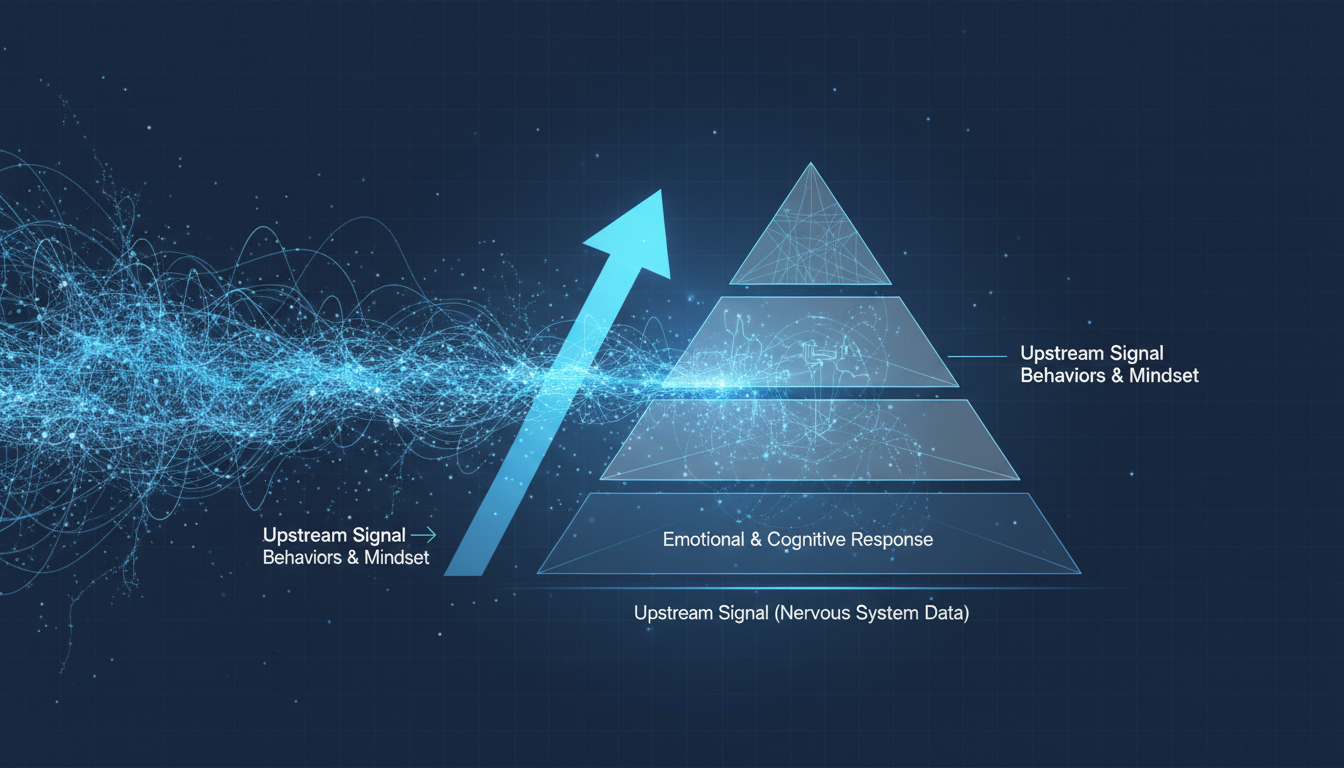
The reason conventional methods fall short is that they attempt to solve the problem at the wrong level. They focus on managing the symptoms—the negative thoughts, the overwhelming feelings, the reactive behaviors. Productivity hacks and mindset shifts are like patching leaks in a faulty pipe; they can help, but they don’t address the pressure building up in the system. The real issue lies further upstream. Before a thought is formed, before an emotion is felt, your nervous system processes a constant stream of biological data. This is your upstream signal. It’s the pre-conscious, fundamental input that shapes your entire cognitive and emotional experience. When this signal is dysregulated by the relentless demands of modern life, your system gets locked into a state of ‘compression,’ narrowing your perception and emotional range. No amount of positive thinking can fix a distorted signal.
Recalibrating Your System with Signal Shift
To create genuine, lasting change, you must intervene at the source. This is the foundation of the Signal Shift methodology from CELF. It’s a neuroscience-consistent approach that doesn’t just manage your stress; it fundamentally recalibrates the signal that produces it. This is achieved through brief, frequent micro-practices designed to create targeted microplasticity within your nervous system. Unlike meditation, which often requires significant time and focus, these practices are about precise, timing-based interventions. By engaging in these targeted resets throughout the day, you are actively retraining your nervous system to exit the state of compression and restore its natural range. This isn’t about belief or changing your narrative; it’s a direct biological intervention that shifts how you perceive and experience your world from the ground up.
The 5-Second Reset for Predictable Control
For a high-achiever, time is the most valuable resource. The last thing you need is another complex, time-consuming wellness routine. The CELF system is designed for the reality of your demanding schedule. Each nervous system reset takes only 2 to 5 seconds to perform. The true innovation lies in their integration. The system helps you convert existing digital habits—like unlocking your phone or opening a new browser tab—into powerful, automatic training triggers. This turns ubiquitous digital interruptions from a source of distraction into an opportunity for self-regulation. Instead of adding a task to your to-do list, you embed your training into the fabric of your day. This practical, results-oriented approach gives you a tool for gaining measurable, predictable control over your internal state, allowing you to down-regulate stress and enhance clarity in the moments you need it most.

Managing symptoms offers temporary relief, but mastering your internal signal provides lasting sovereignty. If you’re ready to move beyond merely coping and fundamentally shift your baseline for well-being and performance, it’s time to explore the science behind Signal Shift. Discover how you can gain predictable control over your internal state in just seconds a day and reclaim your full human range.
Conclusion: From Reactive Overwhelm to Conscious Sovereignty
True mastery over your internal world doesn’t come from wrestling with your thoughts or emotions. It comes from addressing the root signal that gives rise to them. For the high-achiever, this is the ultimate competitive advantage. By shifting from managing surface-level symptoms to recalibrating your fundamental internal signal, you can move from a state of reactive overwhelm to one of conscious sovereignty. This means gaining authorship over your experience, enabling you to operate with sustained clarity under pressure, maintain emotional stability without suppression, and unlock a new level of performance and presence in every aspect of your life.
Leave a Reply