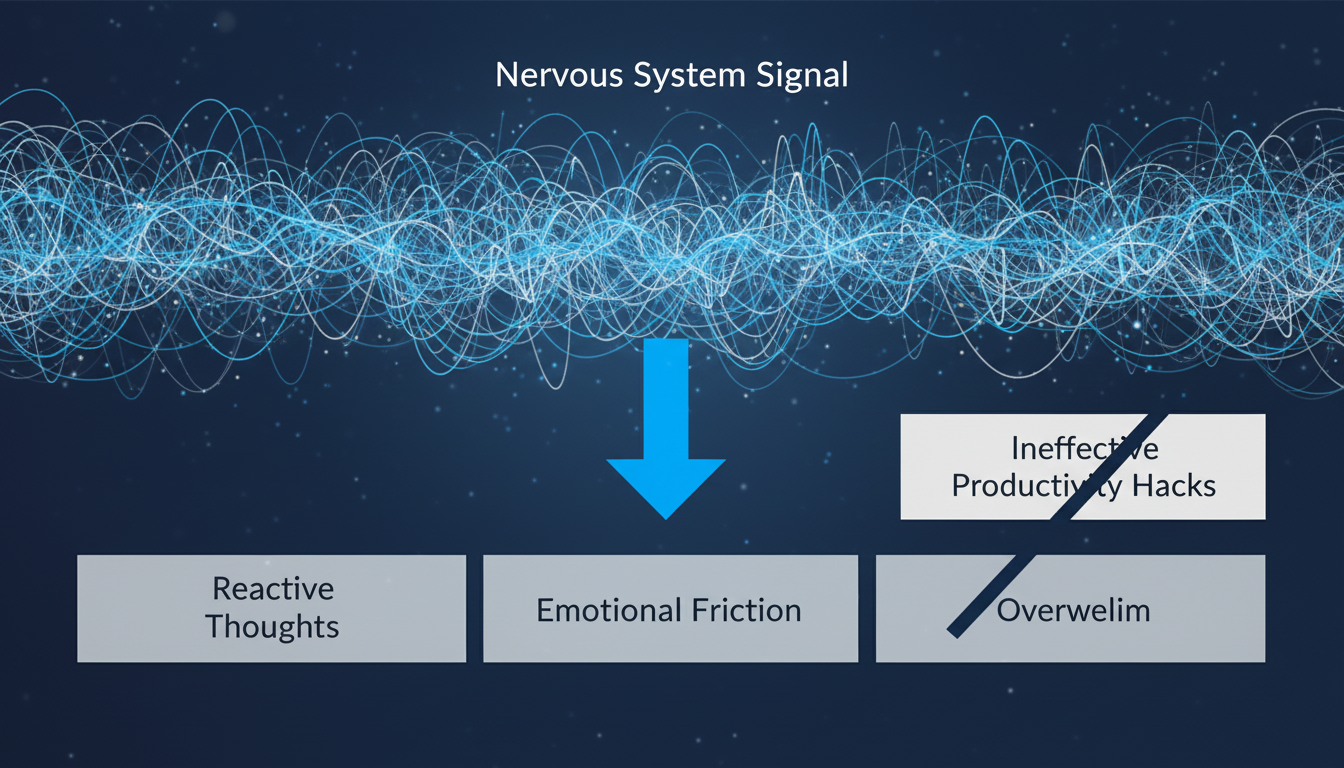
You’ve done it all. The time-blocking, the to-do lists, the Pomodoro timers, the digital apps that promise seamless organization. Your calendar is a work of art, and your projects are meticulously planned. Yet, despite this external order, an internal chaos persists. You’re still wrestling with that familiar sense of chronic stress, the persistent brain fog that clouds your best thinking, and the emotional friction that wears you down. This is the high-achiever’s paradox: the more you try to control your environment, the more you feel a lack of control on the inside. The truth is, traditional productivity hacks are failing you because they’re designed to manage your tasks, not your nervous system. They are surface-level solutions to a much deeper, biological problem.
The Upstream Problem: It’s Not Your System, It’s Your Signal
That feeling of being overwhelmed, irritable, or unable to focus isn’t a personal failure or a flaw in your time management system. It’s a biological signal. Your nervous system, compressed by the relentless demands of modern life, is sending out a constant alert that it’s operating beyond its capacity. Most self-improvement methods focus on changing the ‘narrative’—the stories you tell yourself about your stress or the frantic thoughts that race through your mind. But this is like trying to rewrite the script of a play while ignoring the frantic, blaring fire alarm in the theater. CELF’s methodology is different. It teaches you to address the problem at its source: by regulating the underlying signal your body is sending before it ever translates into a negative narrative. By intervening at this fundamental, upstream level, you can stop fighting your thoughts and start changing the very feeling that creates them.
The Flaw in ‘Top-Down’ Control: Why You Can’t Think Your Way Out of Stress
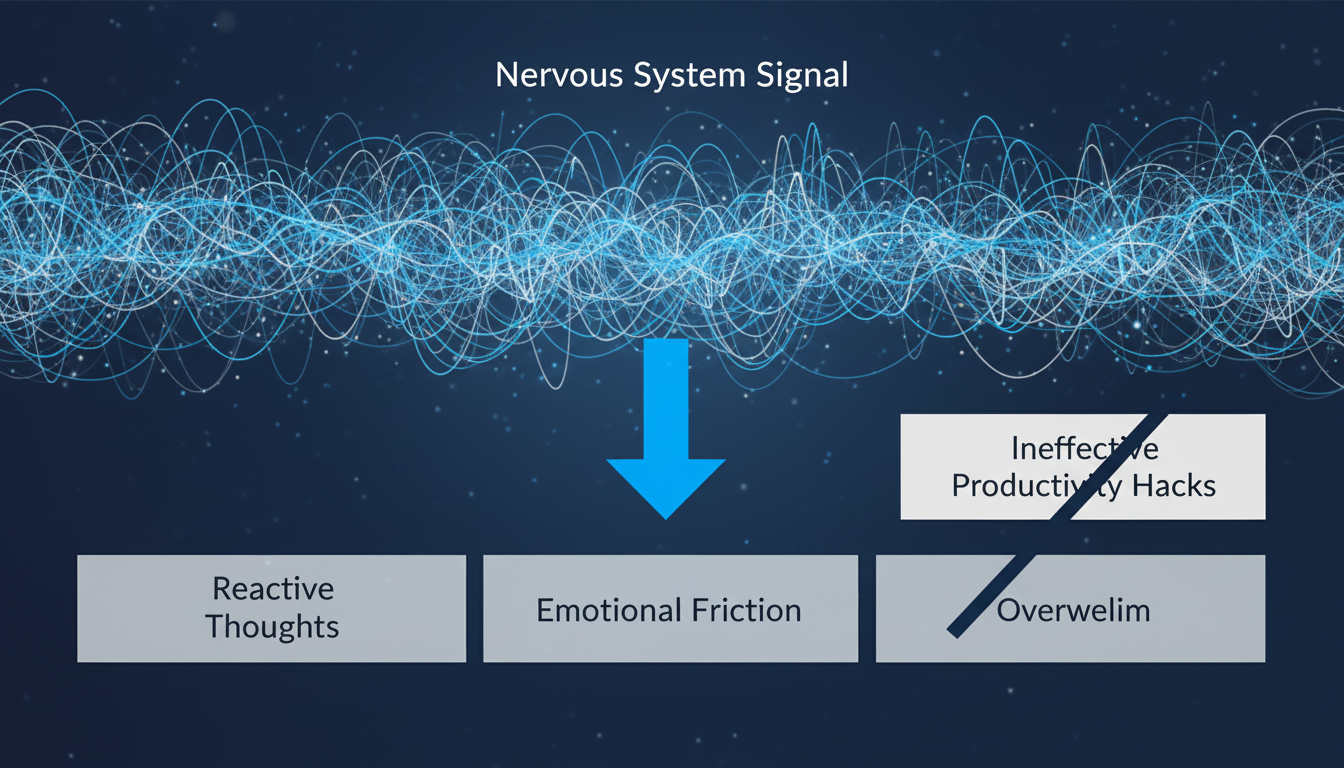
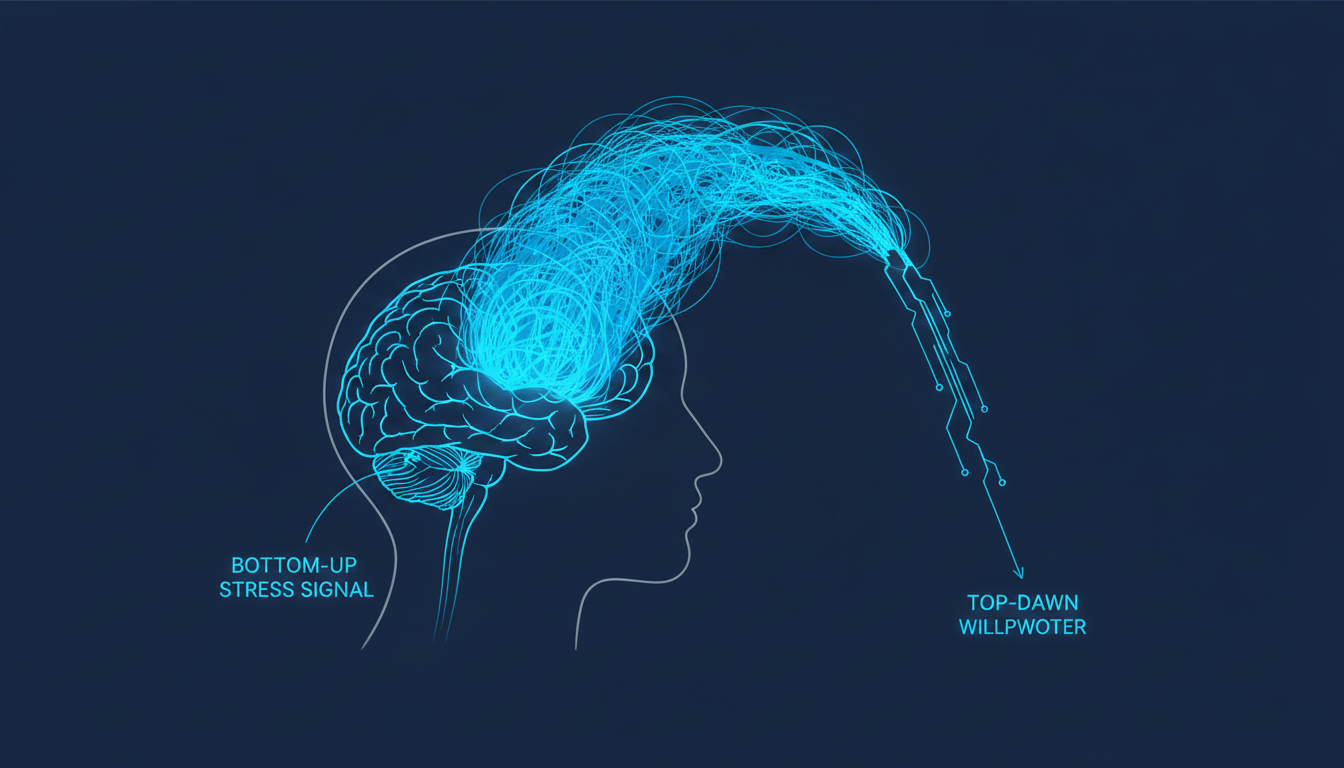
Have you ever tried to ‘think positively’ or ‘just calm down’ in a moment of high pressure, only to find it makes things worse? This is because you’re attempting ‘top-down’ control. Methods that rely on willpower, logic, and conscious thought originate in the prefrontal cortex, the most evolved part of your brain. However, the stress response is a ‘bottom-up’ process. The initial signal of threat or overwhelm is detected by more primitive parts of your brain long before your conscious mind is even aware of it. This pre-cognitive signal has already triggered a cascade of physiological reactions—a racing heart, shallow breathing, muscle tension. By the time you try to apply logic, you’re already in a reactive biological state. Trying to overpower this state with thought alone is like trying to stop a tidal wave with a bucket. It’s exhausting, ineffective, and often leads to more frustration, not less.
A ‘Bottom-Up’ Solution: Introducing the 5-Second Signal Shift
If top-down control fails, the answer lies in a bottom-up solution that speaks directly to your biology in a language it understands. This is the foundation of CELF’s neuroscience-consistent approach. Instead of battling your thoughts, you can directly intervene at the level of the nervous system with brief, targeted micro-practices. These ‘Signal Shifts’ take as little as two to five seconds to perform and work by resetting the biological signal of compression and threat. They act as a direct input to your nervous system, letting it know it’s safe to stand down from high alert. This provides immediate, palpable relief before stress can spiral into overwhelming thoughts and emotions. It’s a practical, efficient way to regulate your internal state, turning moments of digital interruption, like unlocking your phone, into opportunities for powerful self-regulation.
Conclusion: Move from Reacting to Authoring Your State
True control isn’t found in a perfectly organized schedule or an empty inbox. It’s found in the ability to regulate your own internal state, regardless of external pressures. For too long, high-achievers have been told to simply manage their time and thoughts better, ignoring the biological reality of their stress. It’s time to stop treating the symptoms and start addressing the root cause. By learning to master your internal signal, you can move from a life of constant reaction to one of conscious authorship. You gain predictable control over your focus, your emotional state, and your capacity for clear, strategic thinking.
Stop letting a compressed nervous system dictate your day. Discover the tools to achieve a fundamental and lasting shift in your well-being, gain predictable control over your internal state, and unlock a new level of clarity and performance under pressure. It’s time to master the signal and truly take command.
Leave a Reply