
You’ve done everything right. You use the latest productivity apps, you time-block your calendar with ruthless efficiency, and your to-do list is a work of art. Externally, you’re the model of a high-achiever. Internally, however, it’s a different story. A persistent mental fog clouds your thinking, simple decisions feel draining, and a low-grade hum of stress has become your constant companion. If this sounds familiar, you’re not just tired; you’re experiencing a system failure that no amount of organization can fix. What if the root of the problem isn’t your strategy, but a fundamental issue with your internal signal?

The Misdiagnosis of Modern Stress
In our quest for peak performance, we often treat the symptoms of burnout and stress with surface-level solutions. We download another app, read another book on time management, or try a 10-minute meditation, hoping to patch the leak. This approach is like trying to fix a buggy operating system by constantly rearranging the icons on the desktop. You’re addressing the output, but ignoring the corrupted code running deep in the background. These solutions—task lists, calendar management, even traditional mindfulness—can provide temporary relief, but they fail to address the root cause: the hardware’s ‘signal’ is being compressed by the relentless demands of modern life.
The Science of ‘Signal Compression’
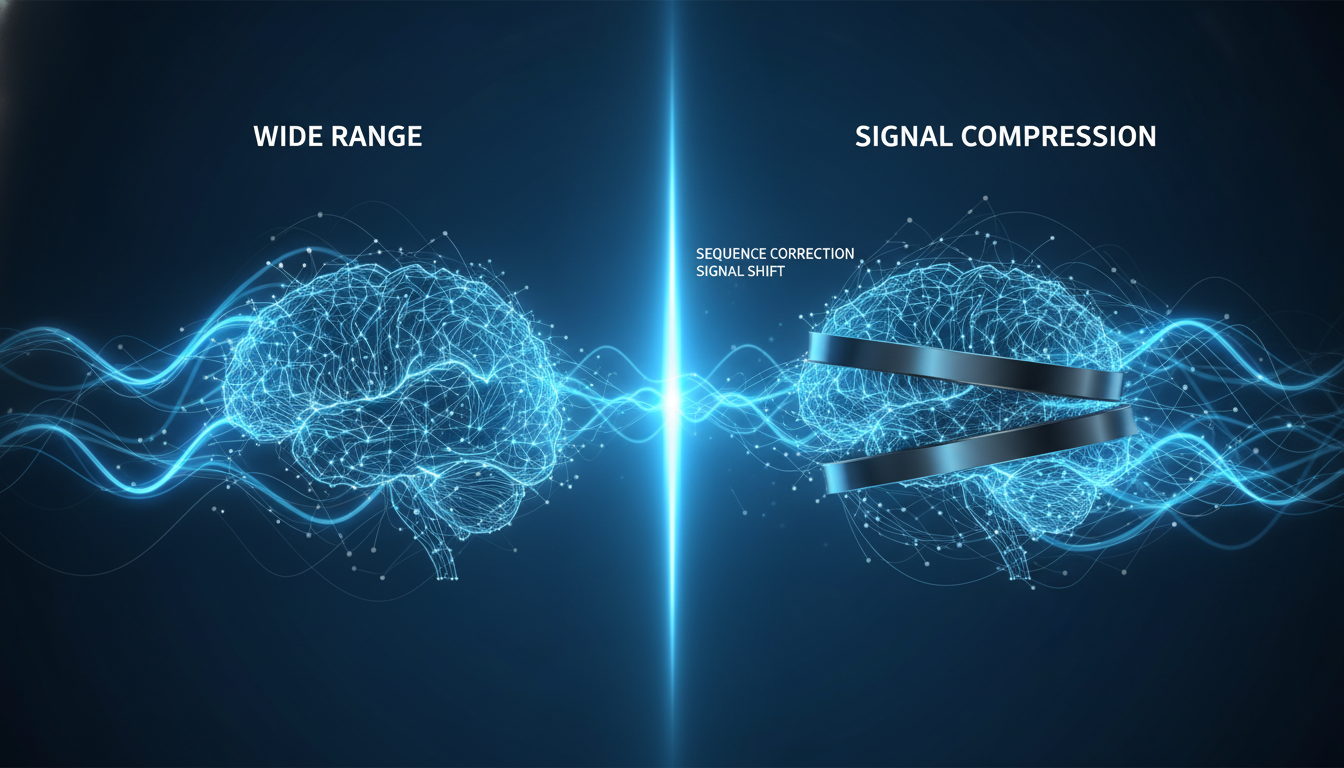
The core of the issue lies in a concept we call ‘Signal Compression.’ Your brain is constantly processing an immense amount of data. In an optimal state, you have a wide perceptual and emotional ‘range,’ allowing you to think clearly, feel deeply, and respond with intention. However, the non-stop digital alerts, constant pressure, and accelerated pace of today’s world act like a vise, squeezing that range. This compression narrows your focus, flattens your emotional bandwidth, and creates a state of chronic internal activation. The results are the very symptoms you’re struggling with: persistent brain fog, heightened irritability, decision fatigue, and that feeling that ‘something upstream is running’ that you just can’t shut off.
From Compressed to Sovereign: The Power of a Signal Shift
To truly escape this cycle, you need to stop managing the noise and start tuning the signal. This is where the CELF methodology introduces a fundamental shift. Instead of focusing on changing your thoughts or managing your emotions after they’ve already appeared, we focus on intervening at the biological level that precedes them. Through a series of brief, frequent, neuroscience-consistent micro-practices, you can learn to actively reset your nervous system throughout the day. Each ‘Signal Shift’ takes only a few seconds but works to decompress your system, restoring your natural range. This isn’t about positive thinking; it’s about re-establishing a clear, coherent biological signal that allows for higher clarity, better decision-making, and genuine emotional control.
A Practical First Step: The 5-Second Reset
You can begin to experience this shift right now. This simple micro-practice is designed to interrupt the compression cycle and reset your internal signal. Think of it as a tactical pause that creates space between stimulus and response.
Pause: Stop what you are doing, whether you’re at your desk or looking at your phone.
Soften Your Gaze: Let your eyes go slightly out of focus. Instead of focusing on a single point, become aware of your peripheral vision—the space to your left and right, and above and below.
Notice Your Contact Points: Briefly bring your awareness to the points of contact your body is making. Feel your feet on the floor, your body in the chair, your fingers on the keyboard.
Exhale: Take a quiet, gentle exhale.
Resume: Continue with your task.
This entire sequence takes less than five seconds. By practicing this simple reset frequently, especially during moments of transition (like unlocking your phone or opening a new browser tab), you begin to retrain your nervous system to operate from a place of width and calm, rather than compression and reaction.

Conclusion
True clarity, focus, and resilience aren’t found in another productivity hack. They are the natural outcome of a well-regulated internal system. The brain fog, irritability, and burnout you’re experiencing are not personal failings; they are indicators of a compressed signal. By shifting your focus from managing the surface-level noise to addressing the fundamental signal, you can move from a state of constant reaction to one of conscious authorship over your own experience.
If you’re tired of merely coping and ready to achieve a lasting shift in your baseline well-being, it’s time to discover the tools for measurable relief and predictable internal control. The CELF system provides a science-backed path to not just manage your stress, but to fundamentally upgrade your internal infrastructure for sustained high performance and a deeper, more authentic experience of life. Explore how you can reclaim your full human range and potential.
Leave a Reply