
Stuck on Stress? Why High-Achievers Need a Signal Shift, Not Another Coping Tactic
You're at the top of your game. You meet deadlines, lead teams, and drive results. Externally, you are the definition of success. Internally, however, it's a different story. You're navigating a constant undercurrent of stress, battling mental fog, and feeling the friction of emotional reactivity. You’ve tried it all—meditation apps, productivity systems, even therapy—but the relief is always temporary. This is the high-performer's paradox: excelling in your career while feeling like you're losing control of your own internal state. It's a frustrating cycle that leaves you wondering why these conventional methods aren't delivering the lasting calm and clarity you need.

The Core Problem: You're Treating Symptoms, Not the Signal
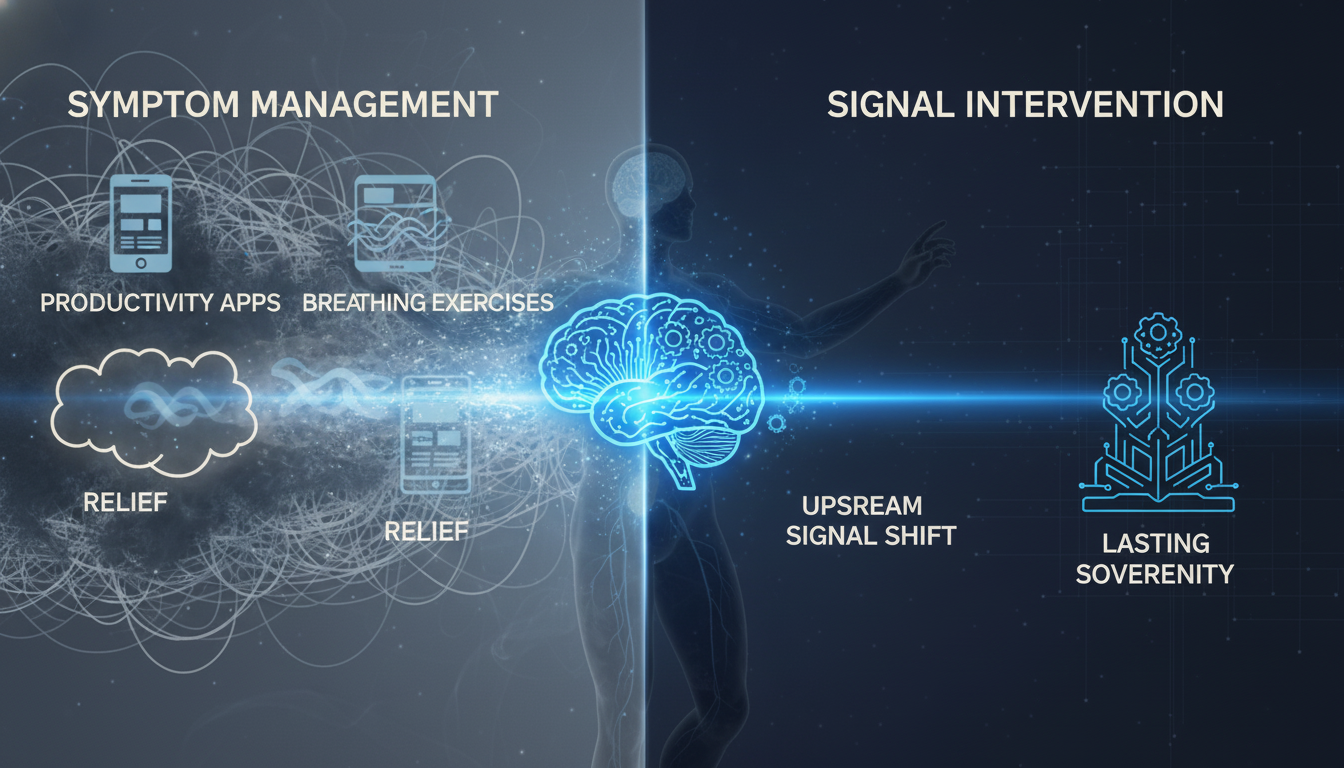
The reason those coping strategies fall short is simple: they are designed to manage the consequences of stress, not its origin. Productivity hacks help you organize the chaos, and surface-level mindfulness might temporarily quiet the noise, but neither addresses the root cause. They are downstream solutions for an upstream problem. The real issue lies in the fundamental biological 'signal' your nervous system sends in response to the relentless demands of modern life. This signal creates a 'compression'—a narrowing of your perceptual awareness and emotional bandwidth—that triggers reactivity before you even have a chance to think. You're not just stressed; your entire system is being conditioned to operate in a perpetually defensive, narrow state.
The Neuroscience of Control: Introducing the 'Signal Shift'
Imagine if you could intervene before the stress response fully hijacks your system. That's the essence of a Signal Shift. It's not a mindset trick; it's a fundamental, neuroscience-consistent intervention that works directly with your nervous system. The CELF system utilizes brief, precisely timed micro-practices designed to interrupt the pattern of compression. These practices act as a reset, restoring your perceptual and emotional 'range'—the ability to see the bigger picture and respond with clarity rather than react on impulse. By targeting the signal at its source, you shift your biology from a state of chronic defense to one of open awareness, giving you the power to choose your response in any situation.
Practical Application: How 5 Seconds Can Change Your Baseline
For a high-achiever, time is the most valuable resource. The idea of adding another lengthy wellness practice to your schedule is a non-starter. This is where the power of 'microplasticity' comes in. Lasting change in the brain isn't about the duration of a single practice, but the frequency of the stimulus. CELF's micro-practices take only 2-5 seconds to complete. More importantly, they are designed to be integrated into the digital habits you already perform dozens of times a day. Every time you unlock your phone or open a new tab, you have an opportunity to perform a quick, nervous system reset. Instead of your technology being a source of distraction and compression, it becomes a trigger for building a more resilient, regulated, and high-performing internal state. This is how profound change becomes practical and accessible, fundamentally shifting your baseline without demanding more of your time.

Conclusion: Move from Coping to Sovereignty
True command over your life doesn't come from endlessly managing the fallout of stress. It comes from mastering the internal signal that dictates your experience. It's time to stop coping and start building. By shifting from treating symptoms to intervening at the source, you can move beyond temporary fixes and cultivate true 'sovereignty'—a state of conscious authorship over your internal world. This is the key to unlocking not just relief, but a higher level of clarity, resilience, and performance, even when the pressure is on.
If you are ready to gain predictable control over your internal state and achieve a new baseline of calm and clarity, it's time to explore the science of the Signal Shift. Discover how you can turn moments of digital interruption into powerful opportunities for profound and lasting change.
Leave a Reply