

You've checked every box. You excel in your career, meet every deadline, and maintain an image of effortless competence. Yet, beneath the surface of external success, there’s a persistent hum of internal activation. You feel perpetually drained, quick to irritability, and caught in a state of high alert you can't seem to switch off. If this sounds familiar, you're not failing at stress management. Your nervous system is simply stuck in the 'on' position, a common plight for high-achievers in our hyper-stimulated world. This isn't a weakness of character; it's a biological response to an environment that constantly demands more.
The High-Achiever's Paradox: Living in a State of 'Compression'
High-achievers thrive on processing vast amounts of information and making rapid decisions. However, the relentless pace of digital communication and professional demands creates a state we call 'compression'. This is the neurological narrowing of your perceptual and emotional bandwidth. Your brain, in an effort to cope with the information overload, starts filtering out nuance, reducing your ability to think strategically and feel deeply. This sustained pressure keeps your nervous system locked in a sympathetic state—the 'fight-or-flight' mode. It’s a survival mechanism that has become your default operating system, leading to chronic internal stress, mental fog, and that constant feeling of being wired yet tired.

Why 'Coping' Isn't 'Solving': The Limits of Surface-Level Fixes
Many high-performers turn to traditional stress management techniques: time-blocking, productivity apps, weekend getaways, or even mindfulness exercises. While these methods can offer temporary respite, they often fail to create lasting change. Why? Because they operate on the surface, managing the symptoms of stress—what we call the 'noise.' They are like putting a bandage on a wound that needs stitches. These strategies don't address the root cause: the dysregulated biological 'signal' that is generating the stress in the first place. Until you intervene at this fundamental level, you will remain trapped in a cycle of managing burnout, rather than preventing it.
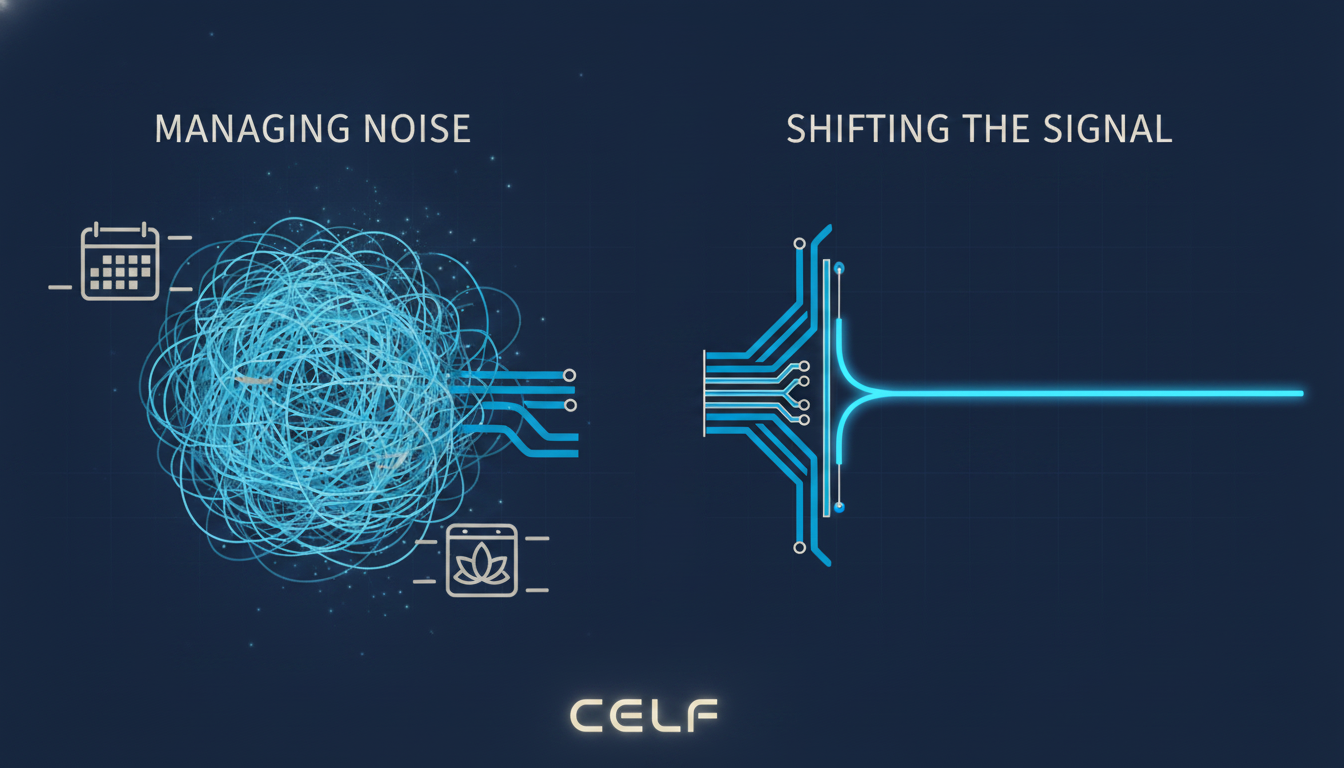
The Upstream Solution: Shifting the Signal Before It Becomes Stress
True sovereignty over your internal state comes from intervening before the noise begins. This is the principle behind the Signal Shift methodology. Instead of dedicating hours to stress management, you can retrain your nervous system with 'micro-practices'—brief, targeted exercises that take only 2-5 seconds to complete. By practicing these resets frequently throughout your day, often triggered by existing digital habits like unlocking your phone, you are engaging in microplasticity. You are fundamentally reconditioning your nervous system to exit the fight-or-flight state and return to a balanced, regulated baseline. This process expands your perceptual and emotional 'range', giving you greater clarity, improved decision-making, and a profound sense of control, even under pressure.
From Managing Stress to Commanding Your Internal State
Ultimately, the goal is not to become better at enduring stress, but to eliminate its chronic hold on your system. For high-achievers, your internal state is your most critical performance infrastructure. By shifting your focus from managing external chaos to commanding your internal 'signal', you move from a reactive position to one of conscious authorship over your experience. This is the key to unlocking not just relief, but a sustainable new level of performance and well-being. If you're tired of merely coping and ready to gain predictable control over your internal state, it's time to explore the science of shifting your signal and reclaiming your full human range.
Leave a Reply